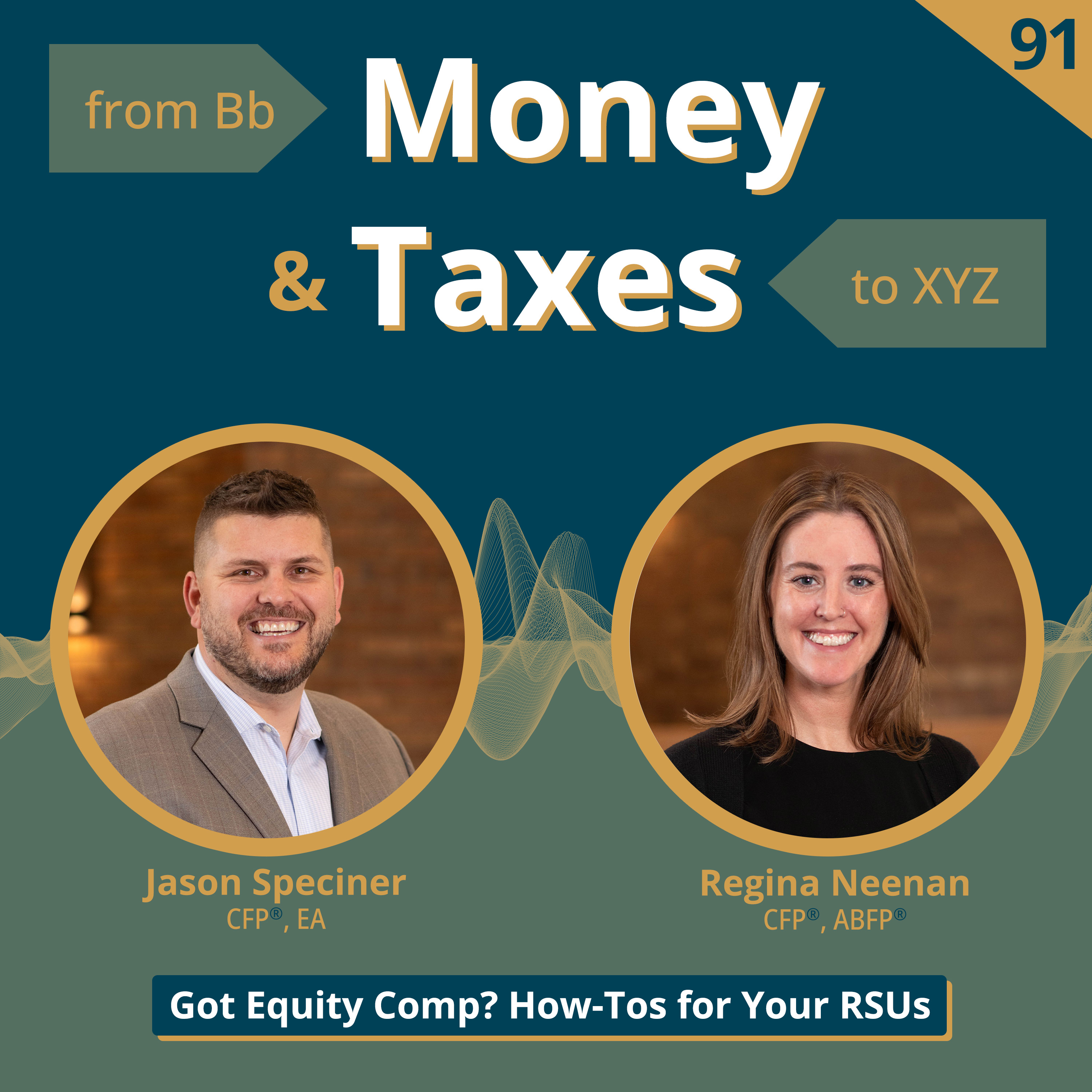

In this episode of Money and Taxes from BB to XYZ, Jason Speciner, CFP®, EA, and Regina Neenan, CFP®, ABFP®, break down restricted stock and restricted stock units (RSUs). These two common forms of equity compensation can quickly turn into a complicated mix of vesting schedules, taxes, trading restrictions, and investment decisions. They explain the important differences between restricted stock and RSUs, when each becomes taxable, and why RSUs can often be viewed much like receiving a cash bonus. The conversation also explores the risks of accumulating too much employer stock and how a thoughtful strategy can turn equity compensation into cash for other financial goals, investments, or tax-planning opportunities.
Takeaways
- Ask yourself: If your employer gave you the same amount as a cash bonus, would you use it to buy company stock? If not, selling vested shares and redeploying the money may make more sense.
- Remember the risk of double concentration: your salary and benefits already depend on your employer, so holding substantial employer stock can concentrate even more of your financial life in one company.
- Build equity compensation into your financial and tax plan before shares vest so you know how you’ll handle withholding, potential tax liabilities, and the cash — rather than reacting after the fact.
Have a question for the show?
Email , and Jason or Regina might answer it in a future episode! New episodes drop every other Thursday, and they’re always ad-free with no subscription required. Learn more about FPFoCo at fpfoco.com and connect with us on social media @fpfoco.
Disclosures
Jason Speciner and Regina Neenan are investment advisor representatives of FPFoCo, a registered investment advisor. The information in this podcast is for general educational and entertainment purposes only. It may not apply to your individual circumstances and should not be considered financial, investment, or tax advice.
© 2026 FPFoCo